
Paddy Harvest Recovery in Madhesh and Koshi Provinces
The recent heavy downpours have brought a wave of optimism for a significant recovery in paddy harvests in Madhesh and Koshi provinces, which are crucial for Nepal's food production. These regions, known as the country's largest food baskets, had been struggling with a prolonged drought following an intense pre-monsoon period.
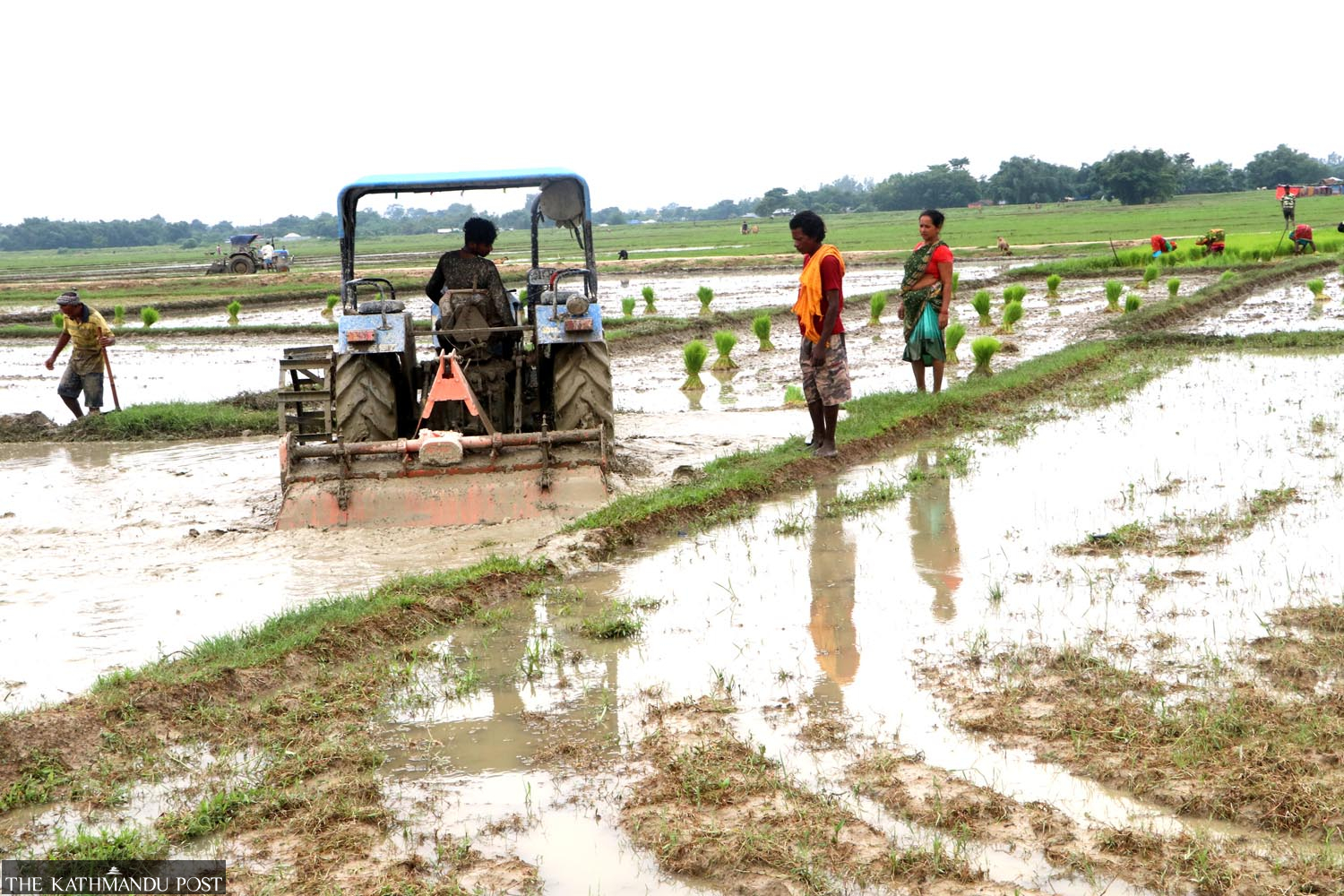
According to the Ministry of Agriculture and Livestock Development, as of August 10, paddy transplantation across Nepal has reached 91 percent. In Madhesh, the rate is at 76 percent, while Koshi stands at 94.42 percent. The revised data from Madhesh Province’s Agriculture Ministry indicates that paddy transplantation has crossed 80 percent, although it remains the lowest among all provinces.
Ajaya Gyawali, an information officer at Madhesh Province's Agriculture Ministry, noted that continuous rainfall last week, especially on Saturday, allowed farmers to transplant paddy. He added that if the rain continues this week, the rate could surpass 90 percent.
Madhesh province has 285,234 hectares of paddy fields spread across several districts. However, experts warn that if drought returns after transplantation, output may drop by around 10 percent. Despite this, Gyawali emphasized that it is still too early to make predictions given the ongoing recovery.
Experts highlight that paddy can be transplanted or sown in the southern Tarai until mid-September, meaning there is no immediate threat to production losses unless severe drought occurs. Last year, Nepal recorded one of its fastest transplantation rates in decades due to "above-normal" rainfall. This year's pace has slowed mainly because of a rainfall deficit in Madhesh and Koshi.
Rajendra Upreti, a rice expert, mentioned that there is still time for transplantation in the southern Tarai. With regular rainfall and adequate fertilizer supply, production should remain steady. He pointed out that Madhesh's productivity is already among the lowest—about 3.49 tonnes per hectare—so the impact of delayed planting is less severe compared to provinces with higher yields.
Large parts of Madhesh, particularly from Siraha to Mahottari, face chronic dryness due to limited irrigation. The Bagmati, Kamala, and Narayani rivers, along with the Chandra Canal, are the main water sources, with no other reliable perennial supply.
To address irrigation shortages, the federal government launched the Rs87 billion Sunkoshi Marin Diversion Project. This initiative aims to channel water from the Sunkoshi River to the Bagmati River to irrigate 122,000 hectares in several districts. Of the total investment, Rs37.3 billion is allocated for irrigation infrastructure, declared a national pride project in January 2020 and scheduled for completion by July 2027.
Despite progress on some projects, officials admit that other irrigation works have advanced slowly. Except for the last two years, when heavy monsoon rains boosted yields, Madhesh fields have often remained parched.
Last year's record harvest of 5.94 million tonnes of paddy was mainly driven by Madhesh's contribution, which received regular and heavy rains. Madhesh accounts for one-fourth of Nepal's total paddy production.
As of August 9, paddy transplantation across Nepal had reached 91 percent of the 1.37 million hectares of available paddy fields. Historically, the mid-August average of paddy transplantation is around 94 percent, except for the past two years, when it hit 98 percent.
Other provinces report higher completion rates: Sudurpaschim (99.72 percent), Karnali (98.4 percent), Lumbini (98 percent), Koshi (94.42 percent), Bagmati (93.56 percent), and Gandaki (92.77 percent).
Monsoon rains are vital for Nepal's economy, delivering nearly 80 percent of the water essential for agriculture and replenishing reservoirs and aquifers. As nearly half of Nepal's farmland lacks irrigation, the June-September rains play a pivotal role in crop production. The monsoon is therefore seen as a critical macroeconomic factor, closely monitored by investors, policymakers, and consumers alike.
Nepal's economy heavily relies on rural areas, and monsoon performance directly influences consumer spending. The agricultural sector contributes about 23.9 percent of Nepal's GDP and employs over 60 percent of the population.
Experts emphasize that timely and above-normal monsoon rains improve the speed and success of crop transplantation, resulting in higher yields. Greater output usually leads to lower food prices, helping to keep inflation within the government's target range. It also increases rice availability, potentially allowing countries like Nepal to import less.
This year, Nepal saw regular and heavy pre-monsoon rains, and the monsoon arrived early on May 29—two weeks ahead of schedule. Yet large parts of Madhesh remained dry for more than six weeks afterwards, triggering an unexpected drought despite forecasts of above-average rainfall.
Water sources dried up, groundwater levels fell, and drinking water and irrigation became scarce. On July 23, the federal government declared all 136 municipalities in Madhesh drought-affected. Subsequently, on July 26, the prime minister conducted an aerial survey of the drought-hit areas, where agricultural fields had dried up and residents queued for water.
A forecast on July 31 predicted moderate to heavy rainfall in August. "It's raining now," Gyawali said. "It's a big respite for people and agriculture."