
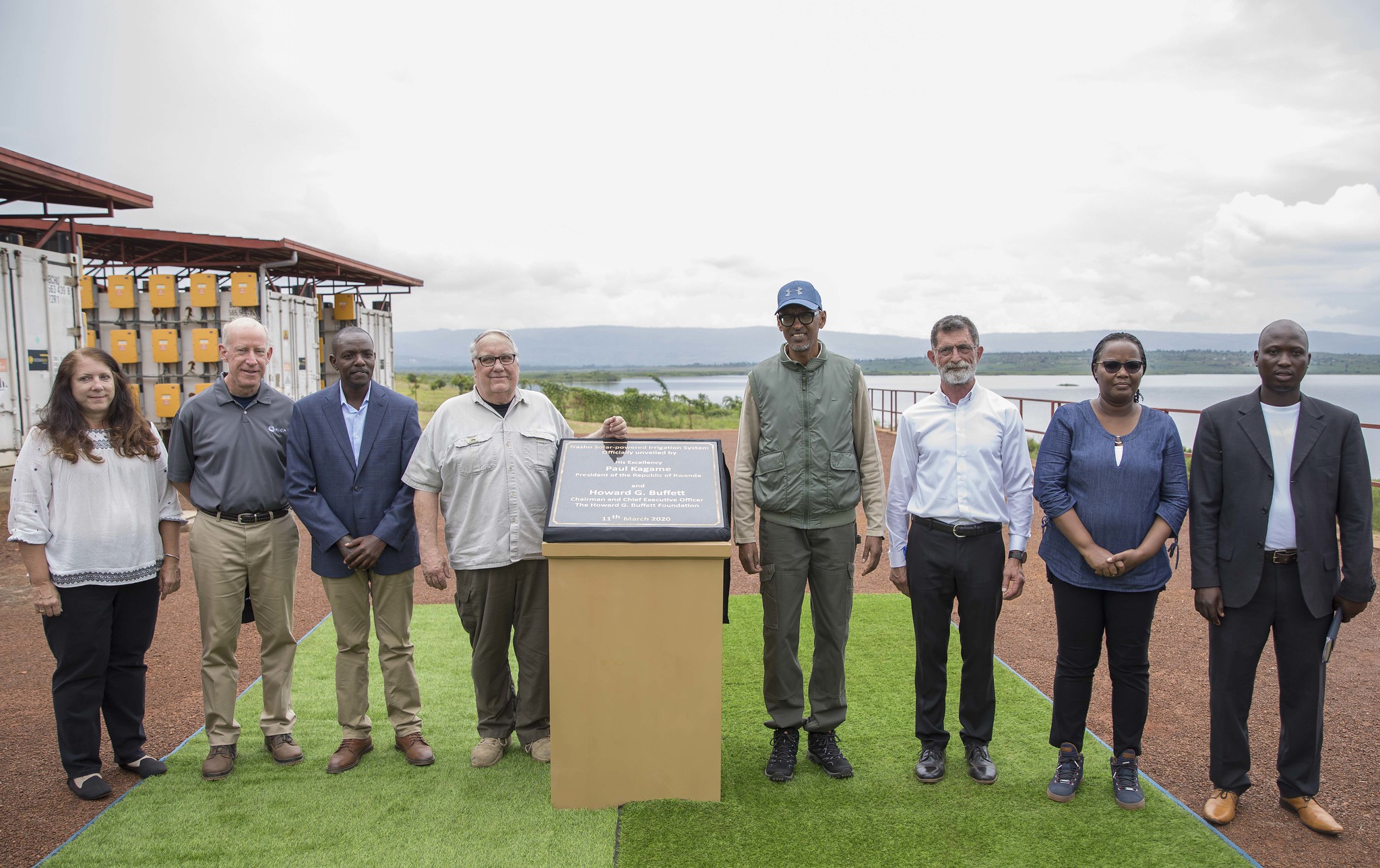
The Transformation of Nasho: A Success Story in Solar-Powered Irrigation
A decade ago, the residents of Nasho, located in Cyambwe Cell, Kirehe District, faced severe challenges due to recurring droughts. These harsh conditions made it difficult for families to grow enough food, often forcing them to migrate in search of sustenance. Violet Kansangire, a 57-year-old farmer, owned 3.5 hectares of land, but the drought rendered much of it unproductive. However, this situation changed with the introduction of the Nasho solar-powered irrigation scheme, which has significantly improved the resilience of farmers in one of Eastern Province's most drought-prone areas.
The project, a collaboration between the government of Rwanda and the Howard G. Buffett Foundation, was recently toured by Prime Minister Justin Nsengiyumva on August 8. Thanks to the initiative, Kansangire reported a substantial increase in her farm yield and expanded her farmland to seven hectares. She now produces eight or nine tonnes per hectare, compared to just two tonnes at best before the project.
With these improved yields came financial stability. Kansangire has since built a house worth about Rwf40 million and purchased two vehicles—one for family use and the other for transporting her farm produce. “Buyers are scrambling for our maize,” she said, highlighting how year-round farming has given Nasho farmers a significant advantage over those who still depend on rainfall.
Today, farmers in Nasho report that they are food secure and even provide agriculture-related jobs to residents from nearby communities, boosting local livelihoods. Dierry Shyaka Nshuti, the manager of the Nasho Irrigation Cooperative, which groups the farmers who benefit from the scheme, explained that the project spans over 1,100 hectares and supports more than 2,000 farmers. He noted that before the irrigation scheme, yields were extremely low—up to one tonne of maize per hectare. Now, the average is 6.2 tonnes per hectare, and farmers can farm for multiple seasons annually.
The project utilizes a combination of solar power infrastructure and pivot irrigation systems. Farmers primarily grow maize, green beans, soybeans, and chili, all of which have ready markets. The beans and chili are even exported, contributing to the project’s success. Nshuti added that the initiative generates about Rwf1.4 billion annually from produce sales, positively impacting the community by enabling farmers to pay school fees for their children.
During his visit, Prime Minister Nsengiyumva commended the farmers and pledged continued government support. “We are backing you fully. Responsible government institutions are available to support you. This is an initiative we value deeply,” he said. “Don’t hesitate to ask for what you need. When you are food secure and doing well, we’re happy too.”
According to Rwanda’s fifth Strategic Plan for Agriculture Transformation (PSTA 5), which covers 2024/25 to 2028/29, the country aims to increase irrigated land from the current 70,000 hectares to 130,000 hectares by 2029. The goal is to build resilient and sustainable agri-food systems across the nation, as stated by the Ministry of Agriculture and Animal Resources.
Key Outcomes of the Nasho Solar-Powered Irrigation Scheme
- Increased Yield: Farmers now produce up to 6.2 tonnes of maize per hectare, compared to just one tonne previously.
- Economic Growth: The project generates approximately Rwf1.4 billion annually from produce sales.
- Employment Opportunities: Farmers provide agricultural jobs to residents from nearby communities.
- Improved Livelihoods: Financial stability allows farmers to invest in homes and transportation.
- Sustainability: The use of solar power ensures long-term viability and reduces dependency on unpredictable rainfall.
This initiative not only addresses the immediate challenges of drought but also lays the foundation for a more resilient and prosperous future for the farmers of Nasho.