
US-China Tariff Truce Extended for 90 Days
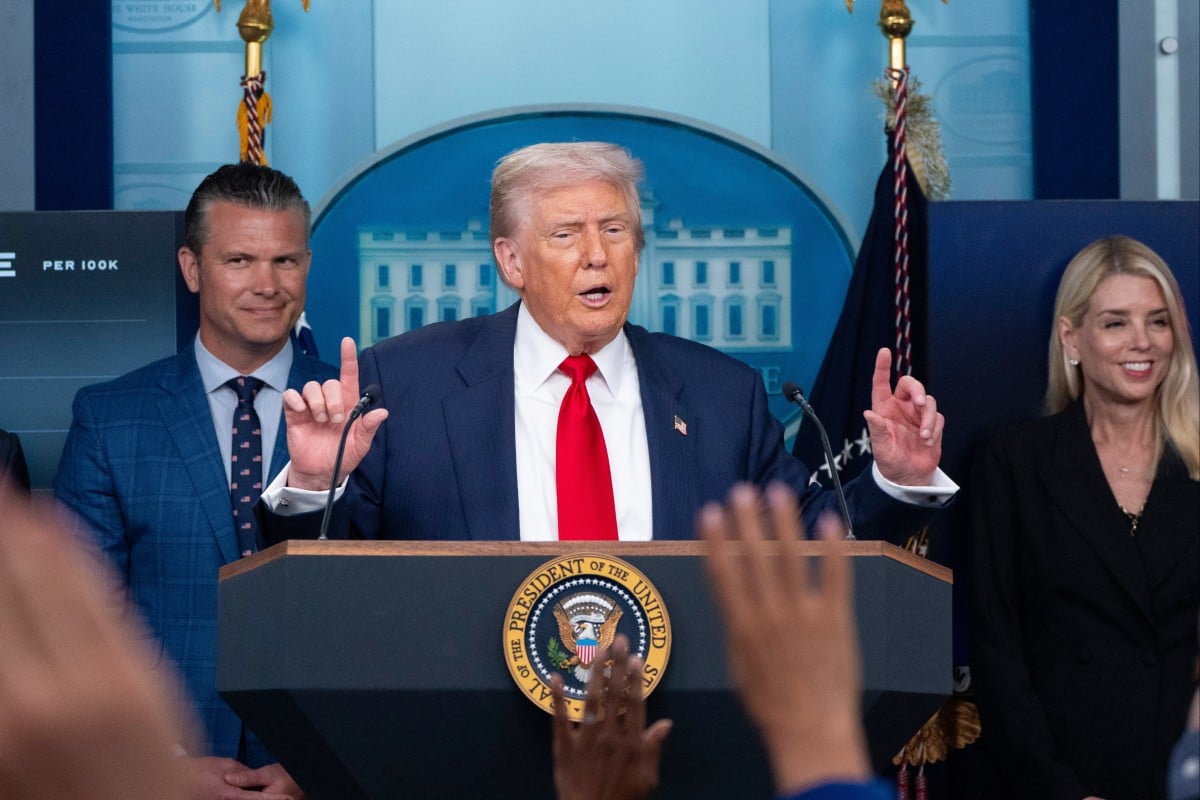
US President Donald Trump has signed an executive order extending the tariff truce between the United States and China by 90 days, effectively halting any immediate escalation of trade tensions. The decision was made just hours before the original agreement was set to expire, but it leaves the broader trade relationship in a delicate state.
The executive order, issued on Monday night, stated that Trump took this action because Beijing had taken “significant steps” towards addressing non-reciprocal trade practices and resolving concerns related to economic and national security matters. The new deadline for the truce is set for 12:00 AM Eastern Time on November 10, with the current 10% tariff on Chinese imports remaining in place until then.
The U.S. government emphasized its ongoing efforts to engage with China to address the lack of trade reciprocity and the resulting security concerns. In response, China’s Ministry of Commerce confirmed that both nations had agreed to extend the tariff truce from August 12, maintaining the existing 10% tariff. Additionally, China pledged to adopt or maintain necessary administrative measures to suspend or remove non-tariff countermeasures against the U.S., as outlined in the Geneva Joint Statement.
If the truce had not been extended, U.S. duties on Chinese imports would have returned to levels seen in April, during the peak of the tariff war between the two largest trading nations. This development comes after weeks of speculation and mixed signals from Washington, following trade talks held in Stockholm, Sweden, last month.
Chinese negotiators expressed a consensus for an extension of the pause on tariff increases, while the U.S. side insisted that no deal would be finalized without Trump's explicit approval. Sources indicated that both sides were expected to extend the truce by another three months following the talks, with the understanding that neither country would impose additional tariffs or escalate the trade war during the extension period.
Sean Stein, president of the US-China Business Council, welcomed the decision, stating that it provides critical time for negotiations to improve U.S. market access in China and address the bilateral trade imbalance. He also highlighted the need for an agreement on fentanyl to reduce U.S. tariffs and roll back China’s retaliatory measures, which would help restart U.S. agriculture and energy exports.
Just before the truce deadline, Trump urged China to quadruple its purchases of American soybeans, citing a potential shortage in China. However, data shows that U.S. soybean exports to China have declined significantly due to the ongoing trade war.
Meanwhile, U.S. Vice-President J.D. Vance mentioned that Trump is considering new tariffs on Chinese imports in response to China’s purchases of Russian oil. Malaysian Prime Minister Anwar Ibrahim noted that President Xi Jinping may attend an ASEAN summit in Kuala Lumpur in October, potentially leading to a high-stakes meeting between the two leaders.
Trump suggested that a meeting between the two leaders could occur before the end of the year if a trade deal is reached. Since April, the U.S. has gradually increased tariffs on Chinese imports, with some reaching as high as 145%. In retaliation, China imposed tariffs of up to 125% and introduced export controls on strategic raw materials.
Despite these developments, several challenges remain in improving U.S.-China trade relations, including Washington’s deal with Vietnam to curb Chinese transshipments and the U.S.’s new AI action plan that maintains tight technology restrictions on China.
Analysts suggest that China holds significant leverage in negotiations, particularly through its control over rare earth mineral exports. William Yang, a senior analyst for northeast Asia at the International Crisis Group, noted that Beijing will likely use this leverage to secure further extensions or press the U.S. for concessions.
Wendy Cutler, vice-president at the Asia Society Policy Institute, pointed out that compared to the 2020 phase-one trade deal, Beijing now has much more negotiating power and is expected to use it to request relaxed export controls on chips and chip equipment.
David Meale, who leads the China practice at the Eurasia Group, emphasized that both sides have significant leverage. He noted that Trump’s delay in confirming the truce extension and his last-minute messaging about soybean imports indicate a desire to maximize leverage in the process.
As the situation continues to evolve, the extension of the tariff truce offers a temporary reprieve, but the long-term prospects for improved U.S.-China trade relations remain uncertain.