
Although global water and ocean levels are increasing, the Baltic Sea experienced a loss of 275 billion tonnes of water at the start of February. It is now 67 cm below the average measured in 1886.
Although this situation has not occurred for 140 years, it is due to atmospheric conditions. Superficially, these should not be a reason for alarm, but, as Dr Tomasz Kijewski from the Institute of Oceanology of the Polish Academy of Sciences mentioned to Euronews, such an anomaly is a clear illustration of the effects of climate change on the environment. The Arctic is primarily responsible for this.
'The open refrigerator effect'
If water levels are increasing, why has a large amount of water vanished from the Baltic Sea region? Specialists state that this is due to powerful winds, a high-pressure area, and the lack of major weather systems.
A post from the Institute of Oceanology of the Polish Academy of Sciences states, 'The persistent strong easterly winds that have been ongoing since the start of January have caused water masses to flow through the Danish Straits into the North Sea, leading to a decline in water levels across the basin.' 'While this weather pattern remains in place, water is being 'trapped' at the south-eastern part of the basins, causing local decreases in levels.'
The intense winds and severe winters that create these circumstances are not evidence that, as some argue, climate change is not real. On the contrary, this is exactly the opposite. As Tomasz Kijewski explains, climate change is not simply about sudden temperature increases, but rather the various weather irregularities that result, among other factors, from the melting of glaciers in the Arctic.

The persistence and reach of the high pressure system, which also covered the North Sea, effectively created space for the substantial volume of water exiting the Baltic Sea, contributing to the magnitude of this event," he explains. "We are referring to 275 cubic kilometers of water! This unique situation was not isolated from the broader atmospheric processes we see on Earth. The most significant among these in this case is the breakdown of the polar vortex, a circulation of air in the upper atmosphere (10-50km) that, in simple terms, helps maintain the Arctic's cold temperatures. This vortex is connected to the jet stream, whose speed and path determine the movement of low and high pressure systems. Therefore, anomalies such as stagnant highs, Arctic cold surges, or heat waves in the north result from disruptions in this jet stream, ultimately leading to Arctic warming.
As he describes, the mass of cold air that has consistently been present over the Arctic and, in a way, kept it isolated from the rest of the world is now starting to 'open up,' significantly influencing the temperature of air currents.
We humorously refer to it as the open fridge effect," says the biologist. "When we open the fridge, air flows out from the bottom and we end up with chilly feet.
In the instance of the Baltic Sea, a mix of human-induced and natural elements is leading to the sea slowly losing its water.
Rainwater volume in the region is on the rise," stated the expert. "Since the last ice age, the Earth's crust has been gradually rising, causing this sea to become progressively shallower. This process also contributes to the shallowing. Shallow water bodies are more prone to warming due to global climate change, and rivers that are controlled transport more nutrient compounds into the sea, particularly phosphorus, which promotes the growth of cyanobacteria. The combination of these elements does not support a high level of biodiversity. The water will become less salty and warmer, which encourages the development of algal blooms. Algae, in turn, consume oxygen, which is essential for other forms of life.
The Arctic is heating up "four times more quickly than the global average"
Anna Sowa, affiliated with the Institute of Oceanology at the Polish Academy of Sciences, is currently based at the Experyment Science Centre in Gdynia as she conducts her research on the Arctic. She mentioned that species from lower latitudes are beginning to extend their territories towards the north. "This process is referred to as borealisation, and such changes have already been observed in different Arctic environments," she explained in an interview with Euronews. "These newcomers might start competing with the native Arctic wildlife, potentially causing a decline in the numbers of Arctic species or even their total replacement."
While conducting her studies from 2004 to 2020, she observed a significant reduction in the concentration of the native moss speciesHarmeria scutulata. "This enabled me to determine that climate change leads to a restructuring of species communities in the Arctic hard bottom ecosystem."
The Arctic region is especially susceptible to climate change, she notes, as "the warming observed there is happening roughly four times quicker than the global average." Higher temperatures might be affecting marine life directly, according to the researcher, but additionally, "it is leading to a series of changes such as melting glaciers and sea ice, increased water cloudiness linked to more suspended particles from rivers and melting glaciers, reduction in the salinity of surface waters, and higher acidification due to greater amounts of dissolved CO2 in the water."
A lively coral reef is becoming an oceanic desert
What issues are the oceans and seas encountering today, and is it still possible to restore them?
Biologists state that the increase in temperatures is unavoidable, yet the extinction of certain species can be somewhat prevented. A major loss occurring in today's seas and oceans is the widespread dying of coral reefs, which offer survival and habitat for at least 25% of all marine life. Scientists note that a temperature rise of 1.5 °C could destroy 70-90% of coral reefs. Nevertheless, warming is not the only factor contributing to the decline in ocean biodiversity.
The main concern for oceanographers is the rising temperature of the global Ocean (meaning all interconnected saltwater bodies, including the Baltic)," Kijewski explains. "The accumulation of energy, which influences climate change, along with extreme weather events, are significant issues. The most striking example is coral bleaching, which results in the destruction of entire coral reef ecosystems. When temperatures rise, coral polyps expel the symbiotic algae that generate an excessive amount of oxygen. This leads to the starvation of the polyps and the collapse of the entire ecosystem, similar to a house of cards. Within just a few weeks after an ocean heatwave (which can increase by up to 2°C), a lively reef can transform into an underwater desert.
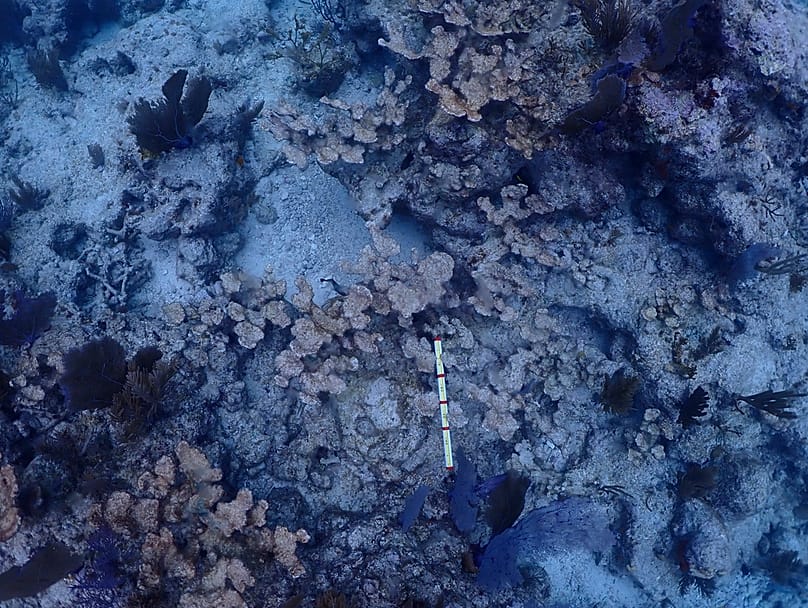
The expert states that the loss of ecosystems leads to the downfall of the fishing industry. Likewise, the extraction of underwater metal resources—known as rare earth mines on the ocean floor—causes environmental damage on a greater scale than surface-level open-pit mining. "It's not just the seabed that gets destroyed, but the overburden—the portion of excavated material that, on land, is piled up—spreads across the ocean depths, blocking light and space for marine life."
The Baltic Sea: Known for Environmental Contamination
The Baltic Sea is known as one of the most polluted seas. However, Kijewski states that the worst period of pollution in the basin has passed. "Thanks to the shared policy of the Baltic States, coordinated by HELCOM and the EU, biological wastewater treatment plants have been installed, and there has been a general increase in attention towards the environment, which has largely stopped the pollution of the Baltic. A clear example is the Bay of Puck, which was almost lifeless until recently, but over the past two decades, seagrass meadows and even seaweed have returned naturally. The level of plastic pollution is also low, and unlike the rest of the ocean, it has not increased over the last 30 years." However, he adds, the unique hydrology of the Baltic requires a long time for water to be purified through exchange. An event like the current low is favorable for this purification, but it will still take another 30 years for the Baltic Sea to undergo significant self-purification. Nevertheless, it will continue to face pressure from climate change and global warming. One example is the cod population, which is currently in a critical condition. "There are not many typical marine creatures in the Baltic Sea, such as starfish. There are only a few species of mussels. Most ocean animals cannot survive in such low salinity. Cod, although adapted to Baltic waters, must spawn in bottom water, which is saltier and colder, leading to anaerobic conditions near the bottom. In a few decades, the areas suitable for cod eggs have more than doubled. It is true that no species has gone extinct in the Baltic Sea, but the ecological capacity of this sea is decreasing for all species except blue-green algae."
Are there any methods through which we can assist the seas and oceans? As per Tomasz Kijewski, the sole and most impactful action we can take is "to refrain from interference." Specialists concur: humanity's poorly executed involvement with the oceans has already resulted in significant and enduring harm.
zaianews.comWatch the Full Coverage